
· 2 min read
The history of the Mongolian ger
From simple ovookhoi shelters to the gers of the Huns, the gers of the Secret History and today’s Tsomtsog Ger.
The Mongolian felt ger emerged from the country’s climate and the way of life of its nomads. Over centuries it was refined again and again, and it has reached the 21st century as a living tradition.
The earliest forms: ovookhoi and shovookhoi
The first dwellings of this family were the ovookhoi and shovookhoi — conical timber shelters that are still used in parts of Khuvsgul province. The ovookhoi packs down easily, so some hunters still take it on long trips, while the shovookhoi suits mountainous areas.
Stages of development
Researchers link the beginning of the ger’s history to the time when hunting tribes and pastoral nomads went separate ways. By the late 19th century around a hundred peoples lived in gers. Central Asian nomads created the ger very early in history (source: The History of Mongolian Ger, 2006).
By its form the ger is divided into Mongolian and Turkic types. The Mongolian ger, known internationally as the Mongolian yurt, has a large crown (toono), short roof poles and relatively tall walls. Its present form is believed to have taken shape more than 3,000 years ago.
Felt-making began in the Bronze Age, which marked the birth of the felt ger. One early form was the ger of the Huns, widespread across Central Asia up to the time of Modun Shanyu.
The Secret History of the Mongols records many 12th-century names for gers — Ebesün nebüle ger, Ger-lüg, Shiltesüte ger, Ordo ger, Altan terme, Örgöte ger — each different in structure and use.
Characteristics of the modern ger
European cathedral builders used the proportions of the human body — the golden section — as a design module. A similar principle of proportion is found in the timber frame of the Mongolian ger, which explains its remarkable strength.
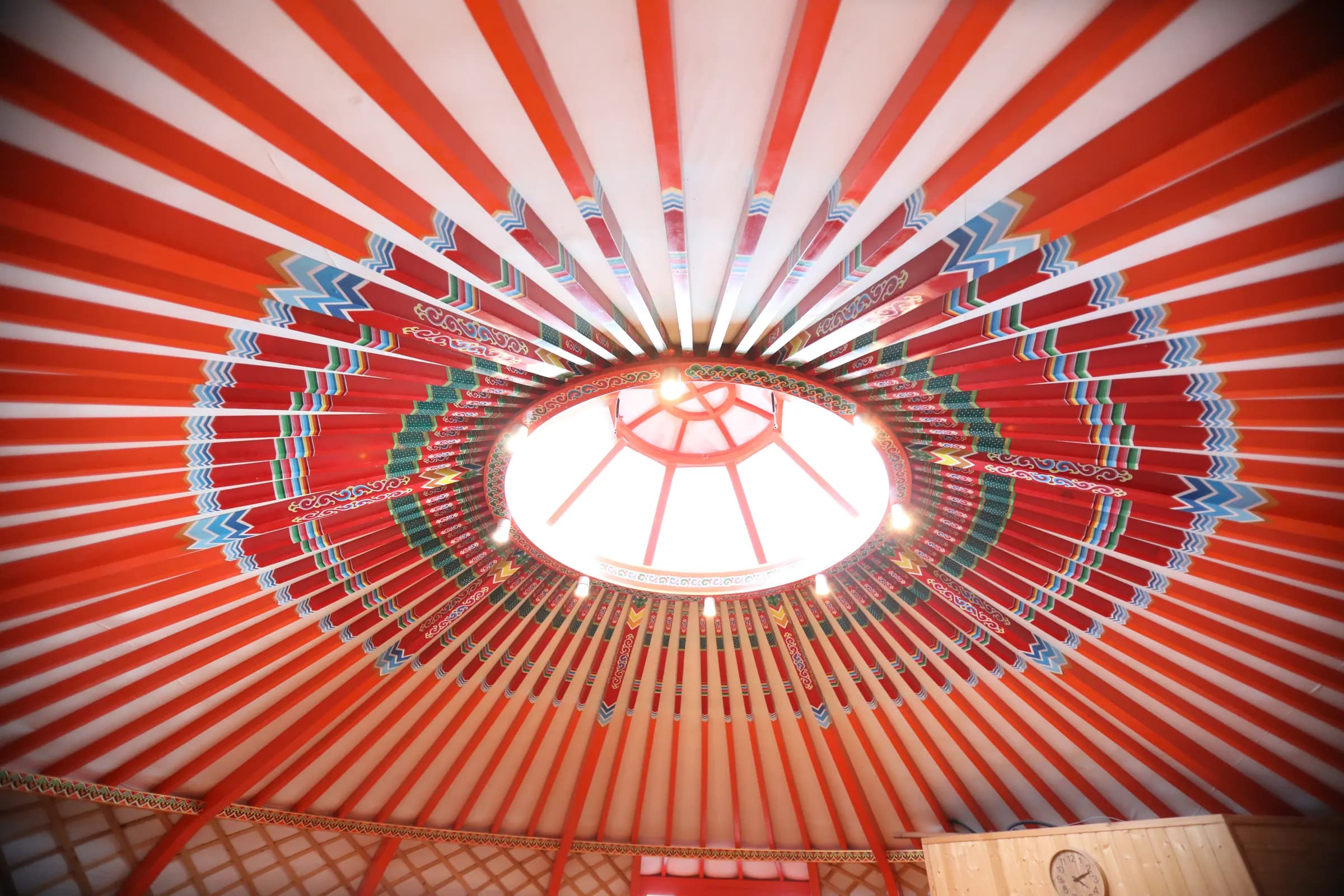
Mongolians told the time by the sunlight falling through the toono: at noon the sun shines directly onto the khoimor, the place of honour. The interior is divided into the khoimor, the hearth, the men’s side and the women’s side, and belongings are arranged accordingly.
Types of ger
- Barga ger — walls lined inside and out with reeds and willow.
- Buryat ger — a round dwelling clad in timber.
- Wooden ger — built from logs with 8, 12 or 16 sides and a felt roof cover.
- Durvud (Uuld) ger — distinguished by a long, narrow felt strip sewn to the front of the wall covering.
- Khalkh ger — the most common type across Mongolia: round, white-covered, with a felt roof cover.
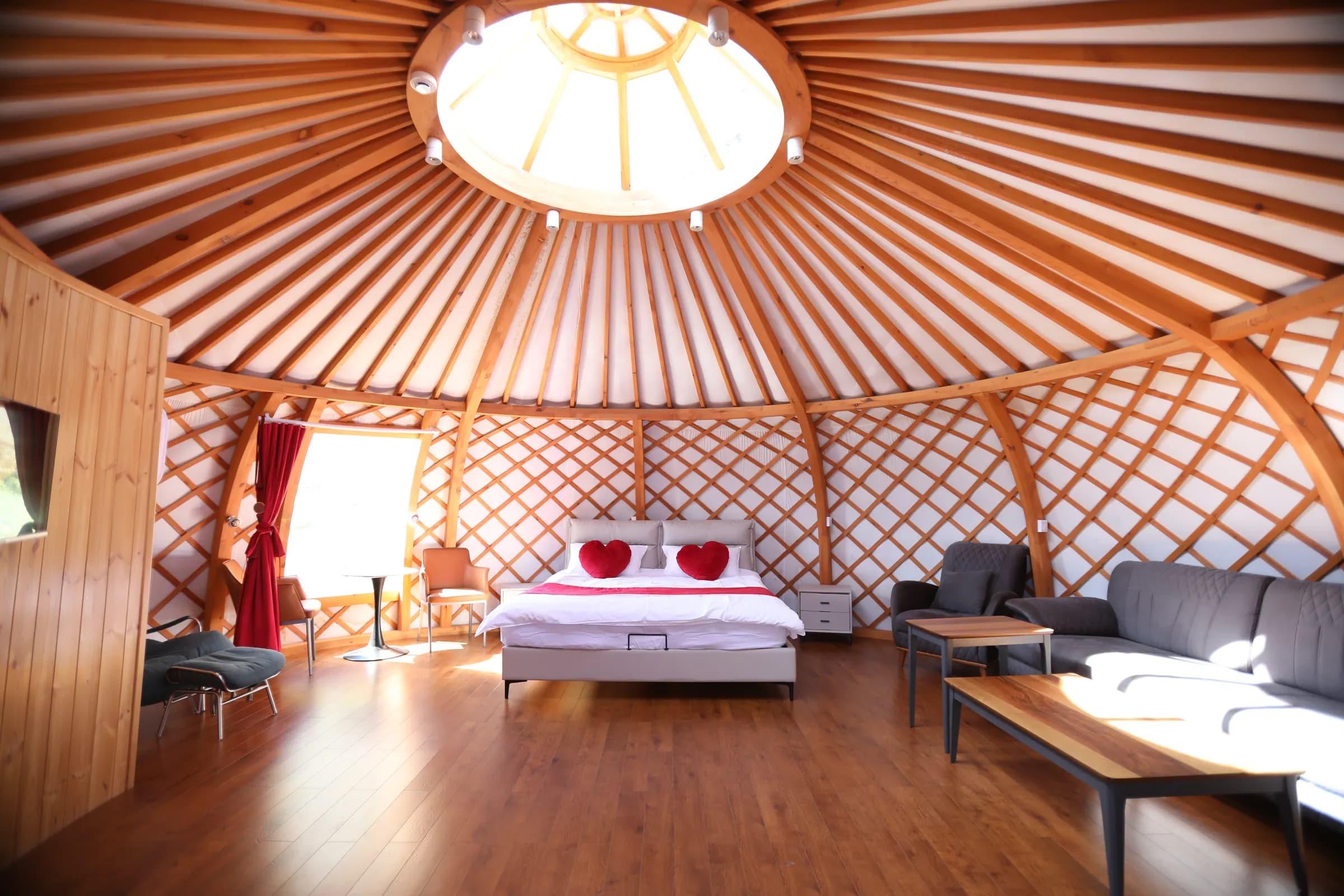
- Tsomtsog Ger — a national brand product, protected as intellectual property, that adapts the traditional ger to modern life with more comfort and light.